 713-662-3123
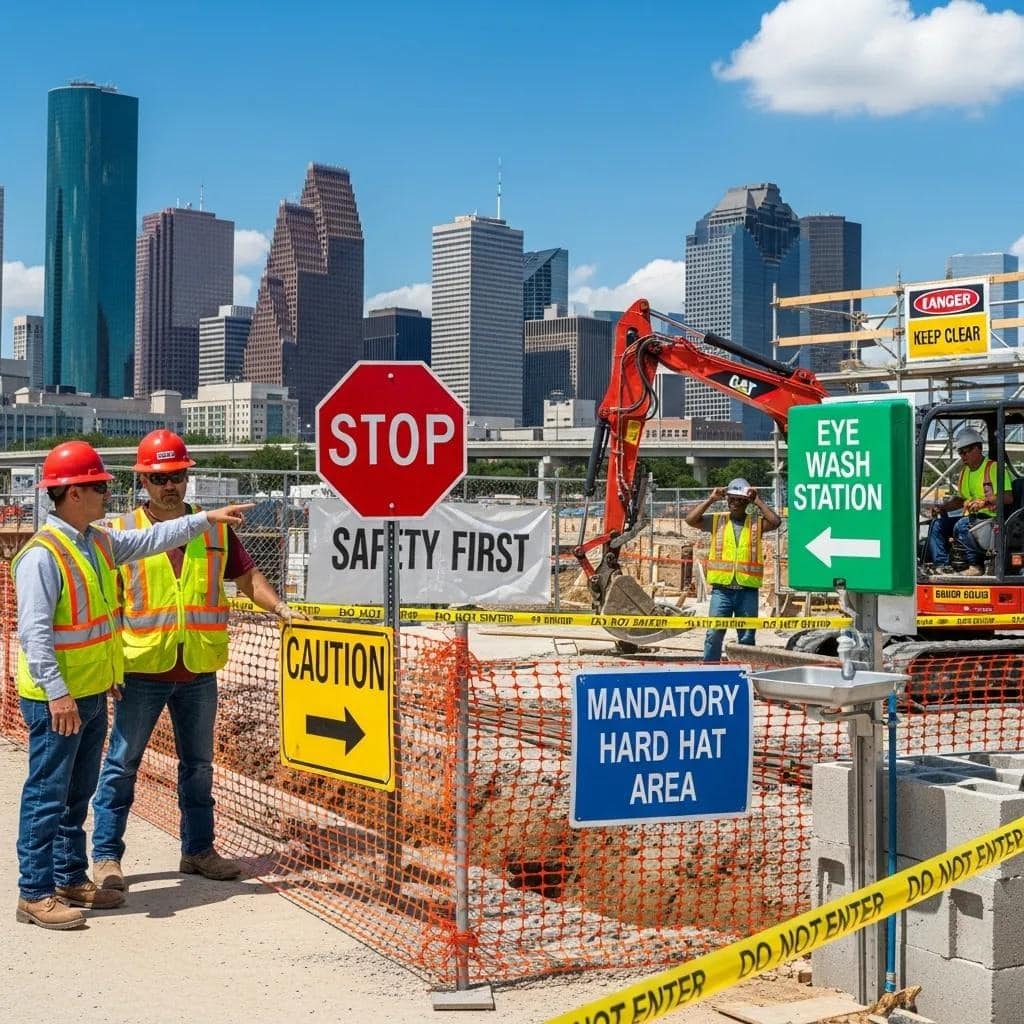
Safety labels are a basic requirement for compliance and a practical way to protect crews on Houston job sites. Contractors must follow OSHA rules that define the kinds of labels required and how they should be used. This article explains which labels are needed, the standards that govern them, and how local suppliers produce custom, compliant labels. With the right information, contractors can reduce risk, stay compliant, and avoid fines. Below we cover required label types, the benefits of working with local printers, and best practices for custom labels.
Which OSHA Safety Labels Are Required on Houston Construction Sites?
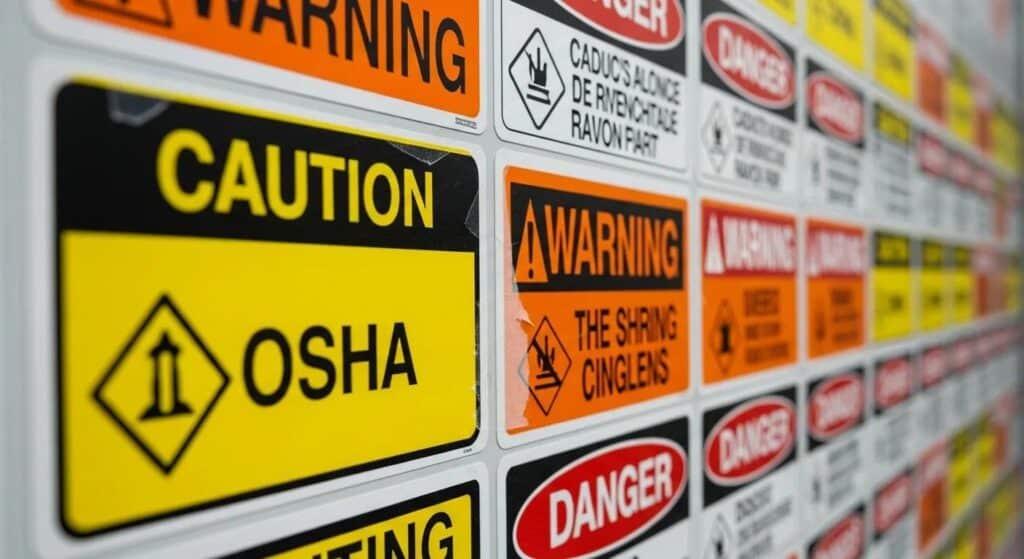
OSHA requires clear, visible signage so workers can identify hazards quickly. Typical required signs fall under standard construction site signage requirements.
- Caution Signs: Highlight potential hazards that might not be obvious at first glance.
- Warning Signs: Call attention to hazards that could cause injury if not avoided.
- Danger Signs: Indicate immediate hazards that could result in serious injury or death.
Labels should be placed where they’re easily seen and read — at approaches, access points, and other strategic locations. Knowing the details for each label helps you stay compliant and protect workers.
Which OSHA Standards Govern Job Site Safety Labels?
OSHA rules covering job site labels are found mainly in Title 29 of the Code of Federal Regulations, including Part 1910. Those rules work alongside industry standards to ensure consistent, effective messaging.
- ANSI Protocols: ANSI provides design and usage guidelines so signs are consistent and easy to understand.
- Classification of Signs: Signs are classified by hazard level so color, symbols, and wording match the risk being communicated.
- Compliance Requirements: Employers must ensure labels meet OSHA (and where applicable ANSI) standards to avoid citations and keep sites safe.
Following these standards helps contractors maintain compliant, safer work sites for all workers.
What Types of Hazard Communication Labels Must Houston Contractors Use?
Contractors in Houston must use a range of hazard communication labels to clearly convey risks tied to materials, equipment, and work processes. These labels are a core part of OSHA’s Hazard Communication Standard (HCS).
- Chemical Hazard Labels: Identify hazardous chemicals and include handling, storage, and emergency information in line with the Globally Harmonized System (GHS).
- Personal Protective Equipment (PPE) Signs: Remind workers where specific PPE is required to reduce exposure to hazards.
- Emergency Information Labels: Provide clear instructions for emergency procedures, evacuation routes, and contact details for safety personnel.
Clear hazard communication labels are essential to keep crews informed and work sites safe. Labels that follow these conventions reduce confusion and improve response in emergencies.
OSHA has also reviewed the scientific foundations of hazard communication programs to support consistent, effective approaches across labeling, warnings, safety data sheets, and worker training.
OSHA Hazard Communication: Labels, Warnings & Worker Training
This review, commissioned by OSHA, examines the evidence behind the main elements of chemical hazard communication programs: labeling, warnings, material safety data sheets, and worker training. It supports international efforts to harmonize laws and standards for communicating hazards. That effort focuses on three functions: classifying health and environmental hazards, classifying physical hazards, and communicating hazard information. The communication piece covers what information should reach users about hazards and protections, and how it should be delivered—through symbols, labels, standard phrases, and training.
Hazard communication: A review of the science underpinning the art of communication for health and safety, 1997
How Can Houston Contractors Order Custom OSHA-Compliant Safety Labels Locally?
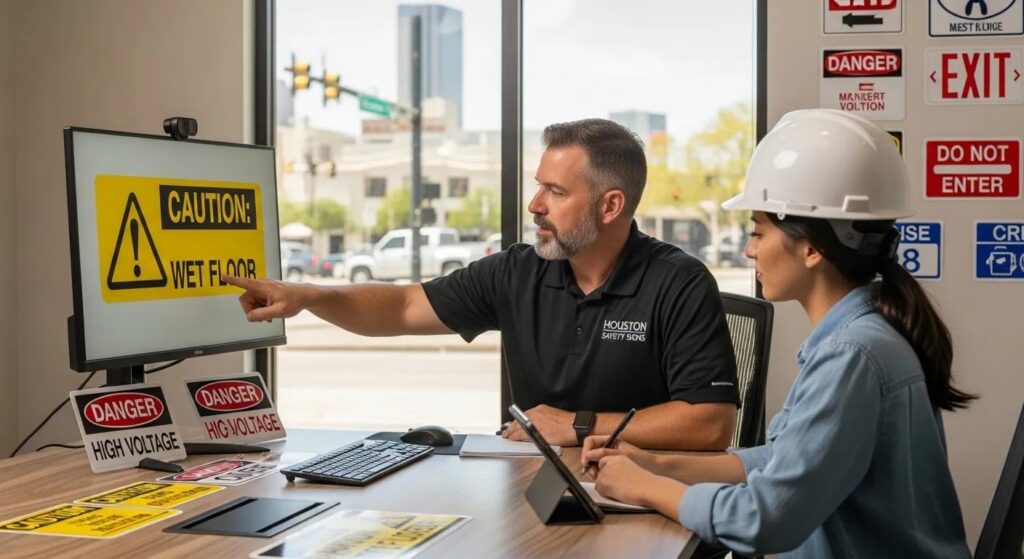
Local sign shops make it straightforward to order custom, OSHA-compliant safety labels. A typical process looks like this:
- Contact a Local Sign Company: Reach out to a specialist—such as “Houston Sign Company”—that understands OSHA requirements and Houston permitting.
- Provide Design Specifications: Share size, color, text, symbols, and any site-specific hazards so labels are accurate and compliant.
- Place the Order: Confirm production details and timelines. Many local providers offer fast turnarounds, often within 24–48 hours for common items.
Working with a local vendor ensures labels meet federal and local standards while giving you faster service and direct support.
What Are the Benefits of Local Safety Label Printing in Houston?
Printing labels locally offers practical advantages for Houston contractors:
- Faster Turnaround Times: Local production cuts shipping time, letting you install labels and get jobs moving sooner.
- Customization Options: Local shops tailor colors, sizes, and messaging to match site needs and compliance requirements.
- Support for Local Businesses: Buying local strengthens community ties and delivers more responsive customer service.
- Expertise in Local Regulations: Local vendors know Houston-specific rules and can advise on permit needs and placement.
Those benefits make local printing a smart choice for contractors who need reliable, compliant labels on deadline.
How to Customize Safety Stickers to Meet Houston Job Site Needs?
Custom safety stickers require a few deliberate choices to stay effective and compliant: signs are required on a construction site.
- Material Selection: Pick durable, weather-resistant substrates—UV-stable vinyl or laminated materials—to preserve readability outdoors.
- Design Customization: Use clear symbols, consistent colors, and concise wording that align with OSHA and ANSI guidance; work with a designer or sign pro if needed.
- Installation Guidelines: Place stickers where they’ll be seen—consider sight lines, lighting, and likely obstructions—to maximize their impact.
Following these steps helps you produce stickers that communicate hazards clearly and last through the life of the project. For specific requirements, consult regulatory guidance.
What Are Best Practices for Ensuring OSHA Compliance with Job Site Safety Labels?
To stay compliant with OSHA, follow these straightforward practices:
- Regular Inspections: Check labels routinely to ensure they remain visible and legible; replace any that are worn or damaged.
- Training for Workers: Train crews on label meanings, hazard responses, and required PPE so signage actually changes behavior.
- Updating Labels: Update or replace labels whenever site conditions or regulations change.
- Documentation and Record-Keeping: Keep inspection, training, and replacement records to demonstrate compliance during audits.
Consistent application of these steps reduces risk, lowers the chance of fines, and improves overall site safety.
How to Maintain Label Visibility and Durability on Houston Job Sites?
Keeping labels visible and durable is essential for ongoing compliance. Key strategies include: construction site signage requirements.
- Regular Cleaning: Remove dirt, paint, and other buildup so text and symbols remain readable.
- Using Weather-Resistant Materials: Choose substrates and inks rated for UV exposure, moisture, and abrasion for outdoor use.
- Scheduled Replacements: Establish a replacement schedule to swap out faded or damaged labels before they fail.
- Proper Installation: Mount labels on stable surfaces away from heavy wear or frequent contact to prolong adhesion and legibility.
Prioritizing label maintenance helps keep safety messages clear and effective in Houston’s climate.
What Are Common OSHA Compliance Challenges for Texas Contractors?
Contractors across Texas commonly run into the same compliance hurdles:
- Outdated Signage: Failing to refresh labels can create gaps between current regulations and on-site messaging.
- Improper Placement: Signs that are hidden, low, or obstructed often fail to warn workers effectively.
- Lack of Training: Without adequate training, workers may not recognize or follow label guidance.
- Inconsistent Material Quality: Low-quality labels deteriorate quickly, reducing their usefulness and requiring frequent replacement.
Addressing these issues proactively is key to keeping sites compliant and workers safe according to OSHA standards.
Where Can Houston Contractors Find Reliable Information and Support for OSHA Safety Labels?
Contractors can rely on several authoritative sources for guidance on OSHA safety labels and signage best practices:
- Houston Sign Company: Local expertise in custom label production, compliance advice, and Houston-specific rules.
- OSHA Website: The definitive source for regulations, guidance, and compliance resources (osha.gov).
- ANSI (American National Standards Institute): Standards and recommendations for sign design and usage (ansi.org).
- Industry Blogs and Publications: Practical tips, updates, and case studies relevant to construction safety.
- Local Trade Associations: Groups like the ABC Houston Chapter offer training, networking, and regulatory updates.
Using these resources helps contractors stay informed, maintain compliance, and protect workers on the job site.
How Does Houston Sign Company Support Local Contractors with Compliance?
Houston Sign Company helps contractors meet safety requirements and keep projects moving by offering:
- Guidance on Permits: Assistance with understanding and securing signage permits required by local authorities.
- Expert Advice: Recommendations on label design, placement, and materials tailored to Houston job sites.
- Local Regulation Knowledge: Ensuring labels meet both federal and Houston-specific standards.
- Rapid Production and Delivery: Fast turnarounds to meet urgent project timelines.
- Ongoing Support: Continued consultation and updates as regulations evolve.
Partnering with a local sign company simplifies compliance and gives contractors a reliable resource for ongoing safety needs.
What Resources Are Available for Staying Updated on OSHA Label Standards?
To keep up with OSHA label standards and related requirements, consider these trusted resources:
- OSHA’s Official Website: Regular updates on rules, guidance, and enforcement (osha.gov).
- ANSI Resources: Standards updates, guidelines, and best practices (ansi.org).
- Industry Newsletters and Alerts: Subscribe to stay informed about regulatory changes and practical tips.
- Professional Training Programs: Attend OSHA-authorized courses and certifications to remain current.
- Local Trade Associations and Safety Councils: Workshops and seminars that focus on regional compliance needs.
These channels are valuable for contractors who want to maintain compliance and keep their safety programs up to date.
Frequently Asked Questions
What are the consequences of not using OSHA-compliant safety labels?
Not using OSHA-compliant labels can result in fines, increased liability after incidents, and damage to a contractor’s reputation. Beyond penalties, poor hazard communication raises the risk of injuries or worse on site. Keeping labels current and compliant reduces legal exposure and helps protect crews and your business.
How often should safety labels be inspected and updated?
Inspect labels regularly—monthly is a good baseline—to make sure they remain visible and legible. Replace any that are damaged, faded, or outdated right away, and update labels whenever site conditions or regulations change.
What types of materials are best for outdoor safety labels?
For outdoor use, choose durable, weather-resistant options like UV-stable vinyl or laminated substrates. Use adhesives rated for temperature swings and moisture to keep labels affixed and readable over time.
Can safety labels be customized for specific job site hazards?
Absolutely. Custom labels let you address unique site risks—chemical exposures, special equipment, or site-specific procedures—making hazard communication more accurate and actionable. Local sign companies can help design and produce these custom solutions.
What role does employee training play in label effectiveness?
Training is essential. Labels only work if workers understand them. Regular training on label meanings, required PPE, and hazard responses ensures signage translates into safer behavior and better emergency response.
How can contractors ensure that their labels meet local regulations?
Work with experienced local sign companies that know federal and Houston-specific rules. Stay informed through OSHA and local trade associations, and conduct routine audits to verify compliance. Local experts can advise on design, materials, placement, and permitting.
What are the best practices for label placement on job sites?
Place labels where they’re most likely to be seen—at eye level, at entry points, and near hazards. Avoid obstructions and consider lighting and weather exposure. Review placement regularly during inspections to ensure labels remain effective.
Conclusion
OSHA-compliant safety labels are a straightforward, high-impact way to protect workers and keep Houston job sites in good standing with regulators. Using local vendors for custom labels delivers faster turnarounds, tailored solutions, and hands-on support from companies familiar with Houston’s requirements. Prioritize clear labels, routine inspections, and worker training to reduce risks and stay compliant. Ready to improve safety on your site? Explore our custom safety label options and get the guidance you need to stay compliant and keep crews safe.