 713-662-3123
Event Signage Checklist for Houston Festivals in 2026
A Houston festival needs signs in seven jobs: parking, entry, wayfinding, vendor and stage identification, sponsor recognition, safety and rules, and exit or shuttle return. Count the physical decision points on your site plan, order one coroplast yard sign for each one, specify double sided at any point people approach from two directions, then add ten percent as spares. This event signage checklist takes that count from site plan to teardown, and every sign on it can be a custom coroplast yard sign on a wire stake.
Key Takeaways
- Count decision points, not acres. Every fork, gate, lot entrance, vendor row, and restroom cluster is one sign. Two approach directions means one double sided sign, not two signs.
- Sizes are jobs, not preferences. 24 X 16 and 24 X 18 for walking wayfinding, 18 X 12 for vendor and table identification, 24 X 24 and 36 X 24 for anything a driver reads, 48 X 48 for gates and sponsor walls.
- Roadside placement is where organizers get burned. Texas law bars signs on the right of way of a public road unless state law authorizes the placement.
- Your permit clock is longer than your print clock. A major street function in Houston needs the application filed a minimum of 120 consecutive days ahead, so the sign timeline starts about 18 weeks out.
- Houston weather is the spec. August normals at Bush Intercontinental run a 94.9 degree average high and 4.84 inches of rain, so the material and the stake matter as much as the artwork.
Festival signage fails quietly. Nobody files a complaint. They just circle the block twice, park somewhere questionable, walk in through the wrong gate, miss the sponsor row entirely, and leave twenty minutes early because they could not find the shuttle. The organizer hears none of it. The sponsor who paid for visibility hears all of it, next year, when they decline to renew.
This event signage checklist is built to prevent that. It is organized the way you actually buy: what to order, how many, what size, where it can legally go, and when the order has to be placed.
What signs does a Houston festival actually need?
Seven jobs, in the order an attendee encounters them. Build your sign list against this table rather than against a vague count, because the table is what makes the quantity defensible when your board asks why the print order is what it is.
| Job | What it does | Suggested size | Sided |
|---|---|---|---|
| Parking approach | Turns the last two blocks into a decision, not a guess | 24 X 24 or 36 X 24 | Double |
| Lot and row marking | Tells people where they parked, so exit is not chaos | 18 X 12 | Single |
| Entry and gate | Names the gate, states the bag policy, kills the wrong-line problem | 36 X 24 or 48 X 48 | Single |
| Wayfinding and forks | One sign per fork, arrows only, no paragraphs | 24 X 18 | Double |
| Vendor, stage, and booth ID | Lets attendees and vendors find each other | 18 X 12 or 24 X 16 | Single |
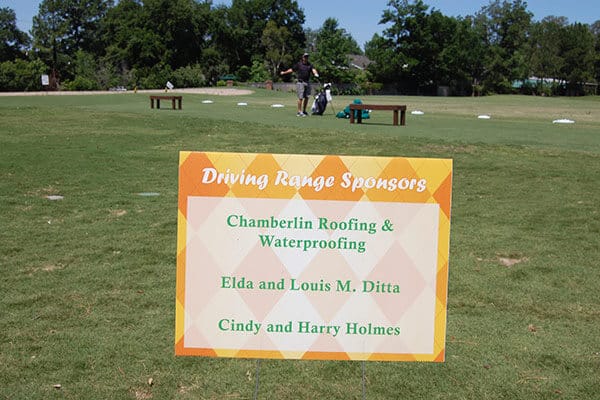
| Sponsor recognition | The deliverable your sponsors actually bought | 24 X 18 or 36 X 24 | Single |
| Safety, rules, and exit | First aid, water, restrooms, shuttle return | 24 X 18 | Double |
Walk your site plan with a pen and mark each of these. That mark count is your order quantity. It is a better number than anything a rule of thumb will give you, because it is derived from your actual site.
How many yard signs should you order for your festival?
Use this arithmetic: decision points, plus sponsor tiers, plus ten percent spares. Approach directions change the sided option, not the quantity.
- Count decision points. Every fork in a walking path, every lot entrance, every gate, every vendor row head, every restroom and water cluster, every shuttle stop. Mark them on the site plan. That mark count is your base quantity.
- Set the sided option, not a second sign. A sign people only see from one direction is single sided. A sign at a fork, a two-way path, or a street median is double sided, which is the same sign printed on both faces rather than two signs back to back. Our guide to single sided versus double sided yard signs covers when the second face pays for itself, and getting this right is where organizers most often overbuy.
- Add sponsor tiers. Sponsor counts come from the sponsorship deck, not the site plan, so confirm the count before you order and chase the artwork alongside it.
- Add ten percent spares. Stakes bend. Signs get moved by well-meaning volunteers. Rain softens ground and a sign goes flat, so spares are cheap insurance against a gap on the map.
Worked example, a neighborhood festival with two parking lots, three gates, and 30 vendors: 2 parking approach signs, 4 lot and row markers, 3 gate signs, 6 interior wayfinding signs, 30 vendor identification signs, 6 sponsor signs, and 4 safety and exit signs comes to 55, and ten percent spares rounds the order to about 60. Change any input and the number changes with it, which is the point. A multi-day event with satellite parking and shuttle loops runs several times that.
Houston Sign Company has printed at both ends of that range since 1946. Its About Us page states that the range runs “from single pieces like a plot map to 5,000 signs on corrugated plastic,” and that “our fast turn-around on rush projects is a trademark that few can match, regardless of the size of the order.”
What size yard sign fits each job?
Match the size to the reading distance, then order it in the sizes the store actually stocks. The yard sign product page lists 12 X 9, 12 X 12, 18 X 12, 24 X 6, 24 X 16, 24 X 18, 24 X 24, 36 X 24, and 48 X 48. Those are your real options, so plan against them.
- 12 X 9 and 12 X 12. Table tents, booth numbers, queue markers. Read from a few feet.
- 24 X 6. The rail or fence strip. Good for repeated sponsor names along a barricade run.
- 18 X 12. Vendor identification, parking row letters, restroom and water markers.
- 24 X 16 and 24 X 18. The workhorse wayfinding size. Arrow plus two or three words, readable at walking speed.
- 24 X 24 and 36 X 24. Driver-facing signs. Parking approach, gate identification, anything read from a moving car.
- 48 X 48. Gate headers, sponsor walls, main stage identification.
Two ordering options on that page change how a sign performs outdoors. Contour cut trims the sign to a shape instead of a rectangle, which is worth it for a gate header or a mascot cutout and pointless for a wayfinding arrow. Grommets let you zip-tie a sign to a fence, a barricade, or a scaffold leg instead of staking it into ground, which matters a great deal on a paved festival site where nothing goes into the dirt. Both options are worth paying for on the signs that need them and worth skipping on the ones that do not, so make the call sign by sign rather than across the whole order.
Where can you legally place festival signs in Houston?
On private property with the owner’s permission, and inside your permitted event footprint. Not on the public right of way. This is the rule most festival teams get wrong, usually the morning of, usually with the best intentions.
Cited fact. “Except as provided by Sections 393.0025 (Municipal Authority to Regulate Sign Placement) and 393.0026 (Exception), a person may not place a sign on the right-of-way of a public road unless the placement of the sign is authorized by state law.” Source: Texas Transportation Code Chapter 393, Section 393.002, Sign Placement Prohibited (section text also published here).
That covers the grass strip between the sidewalk and the curb, the median, the utility pole, and the signal box. Those are the exact spots a volunteer with a bundle of signs will reach for at 6 a.m., which is why the placement rules belong in the volunteer briefing rather than in a folder nobody opens.
Three placements that do work:
- Inside the permitted event footprint. Your special event permit defines the ground you control. Signs inside it are part of your site plan.
- On private property with written permission. The strip mall at the corner, the church lot, the office park entrance. Get it in writing and note who removes the sign.
- On the sponsor’s own property. A sponsor’s storefront can carry your directional sign legally and gets them a second impression.
If you want a permanent or structural sign rather than a staked temporary one, that is a separate process. The City of Houston Sign Administration states that “permits must be obtained before signs can be erected, altered, or repaired” and that “permits are only issued to licensed sign contractors,” with a narrow exemption for non-electrical ground signs under 8 feet tall.
Which festival signs have to be accessible?
Any sign that routes people to parking, drop-off, entrances, or gates. Accessibility is not a separate sign order. It is a set of rules applied to the wayfinding signs you were already buying.
Cited fact. “Signage is needed to direct the public to the location of accessible parking spaces, passenger drop-off points and transit stops and accessible entrances and gates.” Signs “should include the international symbol of accessibility, use easy-to-read typefaces, and be large enough to be read from a distance.” Source: ADA National Network, A Planning Guide for Making Temporary Events Accessible to People With Disabilities.
The same guide notes that although temporary signs do not have to meet the ADA Standards, they should follow the directional sign specifications where possible: simple design, no extended or condensed type, high contrast, non-glare finish, and characters sized to the viewing distance. It also gives one instruction people skip: “Use standard or common words on signs.” Your clever name for the north gate is not a wayfinding word, and an attendee who has never been to your festival will read “North Gate” correctly on the first pass while the clever name sends them to an information booth.
Practical translation for your print file: dark text on a light field or the reverse, sans serif, one message per sign, the accessibility symbol on every accessible route sign, and no photographic background behind the words.
How do you spec signs that survive a Houston festival weekend?
Assume heat, sun, and a short violent downpour, because the climate record says to. Coroplast handles all three, which is why it is the default material for outdoor temporary signage, but the spec choices around it decide whether your signs are still standing at 4 p.m.
Cited fact. At Houston Bush Intercontinental, the 1991 to 2020 climate normals give July an average high of 94.5 degrees with 3.77 inches of precipitation, and August an average high of 94.9 degrees with 4.84 inches. September runs 90.4 degrees and 4.71 inches. Source: NOAA National Weather Service, Houston/Galveston climate normals.
What that means for the order:
- Coroplast, not paper-faced board. Corrugated plastic does not absorb water, so a downpour does not end its day. The complete coroplast buyer’s guide walks through the material in depth, and the weatherproof yard sign material comparison covers how it stacks up against the alternatives.
- Wire stakes go into the flutes. Coroplast is hollow inside, with parallel channels running one direction. The stake legs slide into those channels, so the flute direction has to run with the stake, not across it. Confirm that when you order rather than in the field.
- Grommets for paved sites. If your festival sits on asphalt or a plaza, staking is not an option. Grommets plus zip ties to a barricade is.
- Double sided at every fork. A blank white back facing an approaching crowd is a wasted sign and a confused attendee.
- Bigger type than feels necessary. Houston sun at midday flattens contrast. What reads fine on your monitor reads thin on a lawn.
The signage countdown: what to order and when
Your permit clock is longer than your print clock, so build the timeline backward from the permit deadline. The City of Houston sets minimum filing windows by event type, and the largest of them is 120 consecutive days, about four months.
Cited fact. The City of Houston requires a Major Street Function application be filed a “minimum 120 consecutive days immediately preceding the date sought,” a Minor Street Function with retained appeal rights a “minimum 120 consecutive days,” a Minor Street Function with TxDOT closures a “minimum 90 consecutive days,” a Minor Street Function a “minimum 40 consecutive days,” and a Neighborhood Parade a “minimum 10 business days.” Source: City of Houston Mayor’s Office of Special Events, permitting information.
18 weeks out, which is 120 or more consecutive days. File the permit application if you are running a major street function. Do not treat 16 weeks as close enough, because 16 weeks is 112 days and the city’s minimum is 120. The approved footprint is what your sign plan is drawn against, so nothing about signage is final before this.
8 weeks out. Lock the site plan. Walk it and mark decision points. Close the sponsor deck so the sponsor sign count stops moving.
5 weeks out. Collect sponsor logos as vector files. This is the step that slips on almost every event, because it depends on people who do not work for you, so build in a second round of chasing.
4 weeks out. Finalize copy for every sign. Keep it short, use standard words, and put one message on each sign.
3 weeks out. Place the order. The event signs page states that “turnaround time depends on the size and quantity of your order, but we work fast,” with rush options available, so three weeks gives room for a proof round without paying for speed you do not need.
1 week out. Take delivery, sort by zone, and bundle each zone with its stakes and a printed map of where each sign goes. Doing this indoors a week ahead is the difference between a calm load-in and a scramble in a parking lot at dawn.
Day of. Deploy by zone, photograph each placement, and assign the teardown crew before the event starts rather than after it ends.
Event day: the deployment and teardown checklist
- Assign zones, not signs. One volunteer pair owns parking, another owns the gates, another owns the interior path. Each pair gets its own bundle and map.
- Deploy outward from the venue. Interior wayfinding first, then gates, then parking, then the approach. If you run short on time, the outermost signs are the ones you can add last.
- Carry a mallet and spare stakes. Houston clay in August is not the same ground as Houston clay in April.
- Photograph every placement. The photo set is next year’s deployment map and this year’s proof of sponsor delivery.
- Walk the route as an attendee before the gates open. Start at the last turn off the main road and finish at the first vendor booth, and fix anything you could not follow without already knowing the site.
- Teardown is a scheduled shift. Signs left behind become somebody’s complaint and possibly somebody’s fine. Coroplast signs come back clean and store flat, so undated wayfinding and parking signs reuse for years.
What to order from the Houston Sign Company store
Two products cover everything on this event signage checklist: yard signs and campaign signs, both printed on coroplast. Configure the order on the product page, where the live price updates as you change size, sides, cut, stakes, and grommets.
- Custom yard signs handle every job in the table above. Sizes run from 12 X 9 up to 48 X 48, with Square Cut or Contour Cut, Single or Double Sided, Wire Stakes or No Wire Stakes, and Grommets or No Grommets.
- Campaign signs are the same coroplast build in the sizes candidates and civic committees order most, useful when your festival shares a calendar with an election season booth or a civic sponsor. The product page notes: “Need a custom size or quantity? Please get in touch with Customer Service at 713-662-3123 or email us at info@houstonsign.com.”
Upload a print-ready file or build the sign in the Designer Studio on either page. If you have never ordered signage online before, our walkthrough on ordering custom yard signs online without mistakes covers the file setup that prevents a reprint, and the event signs overview shows the wider range of event work beyond staked signs.
Frequently Asked Questions
How many yard signs does a Houston festival need?
Count the decision points on your site plan, which means every fork, gate, lot entrance, vendor row head, restroom cluster, and shuttle stop. That count is your base quantity. Make a sign double sided rather than ordering two signs where people approach from two directions, then add your sponsor tier count and ten percent spares. A festival with two parking lots, three gates, and 30 vendors works out to roughly 60 signs.
What size yard sign works best for festival directions?
24 X 18 and 24 X 16 are the workhorse wayfinding sizes, readable at walking speed with an arrow and two or three words. Move up to 24 X 24 or 36 X 24 for anything a driver reads, and 48 X 48 for gate headers and sponsor walls.
Can I put festival signs on the side of the road in Houston?
No. Texas Transportation Code Section 393.002 states that a person may not place a sign on the right-of-way of a public road unless the placement is authorized by state law. Place signs inside your permitted event footprint, on private property with the owner’s written permission, or on a sponsor’s own property.
Should festival signs be single sided or double sided?
Single sided is correct when people only see the sign from one direction, such as a vendor booth marker or a parking row letter. Double sided is correct at forks, medians, two-way paths, and anywhere a crowd flows past both faces.
Do coroplast signs hold up in Houston summer heat and rain?
Yes. Corrugated plastic does not absorb water, so the 4.84 inches of rain that August normally brings to Bush Intercontinental does not ruin a sign the way it ruins paper-faced board. Heat is handled by the material, while sun exposure is handled by the ink and the contrast in your artwork.
How far in advance should I order festival signage?
Place the print order about three weeks out, after the site plan and sponsor list are locked. Work backward from your permit deadline, which for a Major Street Function in Houston is a minimum of 120 consecutive days before the event date.
Do festival signs need to meet ADA requirements?
Temporary event signs do not have to meet the ADA Standards, but the ADA National Network guidance says they should follow directional sign specifications where possible: simple typefaces, high contrast, non-glare finish, standard words, characters sized to the viewing distance, and the international symbol of accessibility on signs directing people to accessible parking, drop-off points, entrances, and gates.
Sources
- Texas Transportation Code Chapter 393, Outdoor Signs on Public Rights-of-Way, with the Section 393.002 text also published at Texas Public Law
- City of Houston Mayor’s Office of Special Events, permitting information
- ADA National Network, A Planning Guide for Making Temporary Events Accessible to People With Disabilities
- NOAA National Weather Service Houston/Galveston, IAH climate normals summary
- City of Houston Sign Administration, Houston Permitting Center
About Houston Sign Company. Houston Sign Company opened in downtown Houston in 1946 and today operates from 5801 Chimney Rock Rd, Houston, TX 77081, between The Galleria and the City of Bellaire. Call 713-662-3123 or email info@houstonsign.com. Coroplast yard signs and campaign signs are available to configure and order directly at buy.houstonsign.com.