 713-662-3123
Here’s the short answer, straight from a shop that prints all of these every week. Corrugated plastic signs (coroplast) win for yard signs and anything temporary outdoors. Aluminum and dibond win for permanent storefront and site signage. Foam board wins indoors. Vinyl banners win when you need big, temporary coverage for cheap.
Why does the choice matter? Because signage does real work: 76% of American consumers have entered a store they’d never visited before based on its signs (FedEx Office, 2012). Put the wrong material in the wrong spot and you either overpay or watch your sign fail early. This guide compares all four honestly, Houston weather included.
Key Takeaways
- Coroplast is the budget pick for temporary outdoor signs, and volume pricing drops the per-sign cost when you order in quantity
- Aluminum and dibond are the multi-year choice for permanent exterior signage
- Foam board is indoor-only; vinyl banners cover big temporary spaces
- Coroplast is 100% recyclable (Coroplast)
Ready to compare prices yourself? Shop custom coroplast yard signs in 9 sizes, single or double sided, with wire stakes available as an add-on.
What Are Corrugated Plastic Signs, Exactly?
Corrugated plastic signs are printed sheets of extruded high-impact polypropylene copolymer, better known by the brand name Coroplast. The material is chemically inert, and most oils, solvents, and water have no effect on it, which is why it performs under adverse weather conditions (Coroplast Product Properties).
Think of it as plastic cardboard. Two flat faces, hollow flutes in between. That structure is the whole trick: it’s stiff enough to hold a printed face flat, light enough to carry a stack under one arm, and hollow enough that wire stakes slide right through it.
We covered the material in depth in our complete guide to coroplast signs. This post is about the matchup: coroplast vs aluminum signs, foam board, and vinyl banners.
How Do the Four Main Sign Materials Compare?
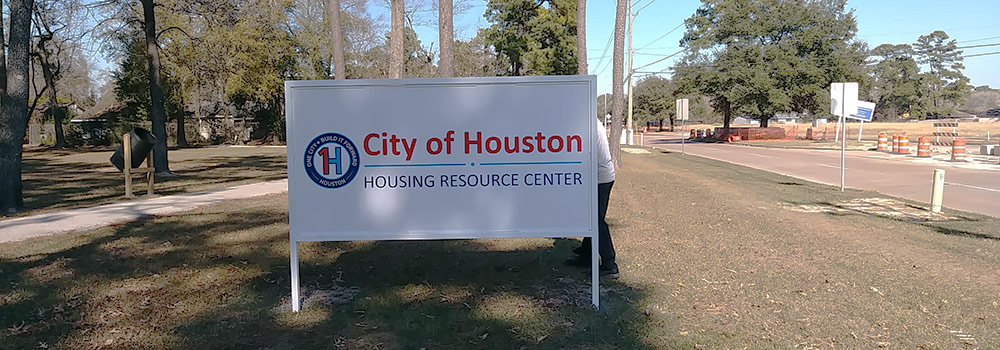
No single material wins everything. Coroplast takes cost and portability, aluminum takes longevity, foam board takes indoor print quality, and banners take sheer coverage per dollar. Here’s the honest scorecard we walk customers through at the counter, based on what we print and install across Houston every week.
| Attribute | Coroplast (corrugated plastic) | Aluminum / Dibond | Foam Board | Vinyl Banner |
|---|---|---|---|---|
| Weight | Very light | Heavy | Very light | Light (but bulky at size) |
| Rigidity | Semi-rigid | Rigid | Rigid but fragile | Flexible (needs mounting) |
| Outdoor fit | Temporary / seasonal | Multi-year, permanent | Indoor only | Temporary, any size |
| Water resistance | Excellent (water has no effect on the polypropylene) | Excellent | Poor (paper faces swell) | Excellent |
| Cost tier | Budget | Premium | Budget-to-mid (indoor) | Mid |
| Install method | Wire stakes, zip ties, screws | Posts, bolts, professional mounting | Easels, adhesive, hanging | Grommets, rope, frames |
| Best at | Yard signs, events, campaigns | Storefronts, site signs | Lobbies, trade shows | Grand openings, fences, events |
The same picture as a quadrant. Notice coroplast sits alone in the corner most buyers actually need: low cost with real (if temporary) outdoor toughness.
Installation: Weight Decides Everything
Coroplast is the easiest install of the four, and it isn’t close. A corrugated plastic yard sign weighs so little that one person can install a hundred of them in an afternoon with nothing but wire stakes. The stakes push through the hollow flutes, the sign drops on, done. No tools, no hardware, no ladder.
Aluminum and dibond sit at the other end. They’re heavy, they need posts or bolts, and larger panels are genuinely a two-person or professional job. That’s not a knock. Permanent exterior signage in Houston should be mounted like it’s staying.
Foam board installs easily indoors: easels, adhesive strips, ceiling hangers. Banners need grommets and something to tie to, which is why we add grommets as a standard option. Fences, railings, and stage frames all work.
How Do These Materials Handle Houston Weather?
Gulf Coast weather is the real test, and it sorts these materials fast. Coroplast’s polypropylene is chemically inert, and water and most oils simply have no effect on it, so rain and our brutal humidity don’t degrade the substrate (Coroplast). For temporary and seasonal outdoor use, that’s exactly what you need.
One nuance most buyers never hear: UV protection is an optional additive that’s blended into the sheet on request, not a standard feature of all corrugated plastic (Coroplast Product Properties). Ask your printer whether your stock is UV-stabilized before you plan a long summer campaign under Texas sun.
Wind is where weight cuts both ways. A light coroplast sign on wire stakes flexes and survives typical gusts, and if a hurricane-season squall does take one out, you’ve lost a budget sign, not an investment. A solid aluminum panel handles wind better structurally but loads its mounting hardware hard, so permanent installs here need proper anchoring.
Foam board? Keep it inside. Period. Humidity alone will swell its paper faces on a covered porch, never mind rain. Vinyl banners shrug off water but act like sails, which is why we recommend and offer grommet placement that lets you secure them properly, and why smart event crews take banners down when a tropical system is inbound.
Cost: Where Each Material Lands
Coroplast is the budget tier, full stop. At our online store, a custom-printed coroplast yard sign is the lowest-cost rigid sign we sell, and volume pricing brings the per-sign cost down as quantities climb. That price point is why campaigns, realtors, and contractors deploy corrugated plastic signs by the dozen instead of the single.
The other materials stack up in relative tiers. Foam board is also inexpensive, but it’s an indoor product, so it isn’t really competing for the same jobs. Vinyl banners land in the middle: more than a yard sign, priced by the square foot, and cheap for the coverage you get. Aluminum and dibond are the premium tier because you’re paying for a substrate built to stay up for years, plus professional mounting.
There’s a reason all four keep selling. Print is an enormous industry, forecast to reach $834.3 billion globally in 2026 (Smithers), and each material survives because it’s the cheapest correct answer for a different job. The waste happens when you buy the wrong tier: premium aluminum for a weekend event, or budget coroplast for a storefront that needed better.
Indoor or Outdoor: Where Does Each Material Belong?
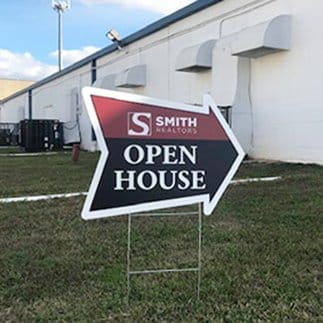
Match the material to the exposure and you’ll rarely go wrong. Outdoors and temporary: coroplast. Outdoors and permanent: aluminum or dibond. Indoors: foam board, or coroplast if the sign might travel outside later. Big temporary coverage anywhere: vinyl banner.
Best use cases, from our own order history:
- Coroplast: real estate listings, open houses, campaign season, job sites, school events, graduation and birthday displays, weekend promotions
- Aluminum / dibond: storefront panels, parking and wayfinding, building IDs, anything bolted down for years
- Foam board: lobby displays, trade show booths, menus, photo backdrops, and other interior signage
- Vinyl banner: grand openings, fence lines, festivals, “coming soon” wraps on buildings
Coroplast even moonlights indoors just fine. It’s the only one of the four that’s comfortable in both worlds, as long as “outdoors” means weeks or a season rather than years.
Why Does Coroplast Win for Yard Signs Specifically?
Three reasons, and they compound. First, the flutes: wire stakes slide straight through the hollow channels, so installation takes seconds and leaves no holes in the printed face. Second, weight: a light sign flexes in wind instead of fighting it, and one volunteer can carry a whole precinct’s worth. Third, price: with bulk discounts on quantity orders, you can blanket a neighborhood for what a single aluminum panel might cost.
Quantity matters more than most people think. A Columbia University-led team ran randomized field experiments across four races and found lawn signs raise a candidate’s vote share by about 1.7 percentage points on average, enough to swing a close election (Green et al., Electoral Studies, 2016). Effects like that come from presence at scale, and coroplast is the only material cheap and light enough to deliver scale.
That’s why virtually every yard sign we print, from political campaign signs to yard signs for Houston businesses, goes on corrugated plastic. If you’re still weighing sizes and options, our yard sign buyer’s guide walks through all nine standard sizes, stakes, and grommets.
Recyclability: One Clear Winner
Coroplast is the only one of the four with a clean end-of-life story. The material is 100% recyclable (Coroplast), since it’s polypropylene. When a campaign or event wraps, signs don’t have to become landfill. Check whether your local Houston-area recycler accepts rigid polypropylene, or collect and reuse the blanks. Plenty of our customers flip last season’s signs around and repurpose them for job-site markers.
When Should You Skip Coroplast and Spend More?
Honest answer from a shop that would happily sell you either: skip coroplast whenever the sign represents your business permanently. Consumers judge you by your signage: 68% believe a store’s signs reflect the quality of its products or services, and 52% are less willing to enter a store with poorly made signs (FedEx Office, 2012). A sun-faded temporary sign on a storefront sends exactly the wrong message.
Three situations where a different material earns its price:
- Permanent storefront or site signage. Go aluminum or dibond. It reads as established, and it’s built for years of Gulf Coast sun. Start with our exterior signs page.
- Indoor displays where finish matters. Foam board gives you a smooth, flat, gallery-grade face that corrugated flutes can’t match up close. See our custom foam board sign printing.
- Wide temporary coverage. Above a certain size, a rigid panel becomes awkward and expensive; a custom vinyl banner covers the same wall for less and rolls up afterward.
Upgrading the right sign pays. Businesses that improved their signage reported roughly 10% increases in sales, profits, and transactions (University of Cincinnati Economics Center, 2012). Spend where permanence matters, save with coroplast everywhere else.
Frequently Asked Questions
Are corrugated plastic signs waterproof?
Effectively yes for outdoor use. The substrate is chemically inert polypropylene, and water and most oils have no effect on it (Coroplast). Rain, sprinklers, and Houston humidity won’t degrade the sheet, which is why coroplast is the default for temporary outdoor signage.
Is coroplast the same thing as corrugated plastic?
Yes. Coroplast is a brand name that became shorthand for corrugated plastic sheet, the way Kleenex did for tissue. If a sign shop quotes you “coroplast,” “corrugated plastic,” or “corex,” they mean the same fluted polypropylene material.
Coroplast vs aluminum signs: which should I buy?
Buy coroplast for anything temporary or seasonal: events, listings, campaigns, promotions. Buy aluminum or dibond for permanent signs that stay up year after year, like storefront and site signage. Cost tells the same story: coroplast is the budget tier, aluminum the premium multi-year tier.
Can I use a coroplast sign indoors?
Absolutely. It’s light, rigid enough to stand in a frame or hang from a ceiling, and cheap enough for short runs. For polished lobby or trade show displays viewed up close, though, foam board’s smooth face usually looks better than visible flutes.
What sizes do corrugated plastic yard signs come in?
Our store offers nine standard sizes, from 12×9 up to 48×48 inches, covering everything from directional arrows to full job-site signs. Every size comes square cut or contour cut, single or double sided. Need something custom? Call 713-662-3123.
How do yard sign stakes work with coroplast?
The sign’s hollow flutes run vertically, and the two prongs of an H-style wire stake slide up into those channels. No drilling, no grommets needed for ground display. Add wire stakes at checkout and installation takes about ten seconds per sign.
Can coroplast handle hurricane-season wind?
Reasonably well, within limits. A staked coroplast sign is light and flexes with gusts, and losing one costs little. For named storms, pull temporary signs and banners down; nothing on wire stakes is engineered for that. You can even spell out messages with corrugated plastic yard letters and restake them afterward.
The Bottom Line: Match the Material to the Job
Corrugated plastic signs are the right buy more often than any other material because most signage needs are temporary, outdoor, and budget-sensitive. Coroplast handles rain and humidity, stakes in seconds, recycles when you’re done, and costs little enough to deploy twenty at a time. Save aluminum for the storefront, foam board for the lobby, and banners for the big temporary stuff.
We’ve printed all four for Houston businesses since 1946, so we don’t have a horse in this race, just 80 years of watching what holds up on the Gulf Coast. You’ll find us at 5801 Chimney Rock Rd, BBB A+ accredited since 2005, and you can reach the counter at 713-662-3123.
Ready to order? Design and buy custom coroplast yard signs online, upload your own artwork or use the Designer Studio, or request a custom quote for odd sizes and big quantities.