
 713-662-3123
The short answer: a vehicle wrap covers the entire vehicle (or a large section) in custom-printed vinyl and turns it into a full mobile billboard, while vehicle graphics (also called decals) are smaller, precisely cut vinyl letters, logos, and spot graphics applied only to specific areas, leaving most of your factory paint exposed. Which one is right comes down to your budget, how bold you want the look, and whether you are rebranding or simply adding contact details.
At Houston Sign Company, we have designed, printed, and installed both for Houston fleets since 1946, so here is the honest breakdown to help you choose.
Key takeaways
- A wrap is full or partial seamless coverage that can change the vehicle’s color and molds to its curves. Graphics are targeted lettering and logos over your existing paint.
- Graphics are the budget-friendly option for simple branding; a full wrap is a larger investment that delivers maximum visual impact.
- Wraps need professional installation; spot graphics are simpler to apply and remove.
- Both use premium cast vinyl, but a laminated finish protects longer against Houston’s intense UV.
- Vans and trucks with large, flat panels (Ford Transit, Mercedes Sprinter, Chevrolet Express) are the best canvases for fleet wraps.
What is the difference between a vehicle wrap and vehicle graphics?
Both use professional-grade vinyl, but they solve different problems. Here is how they compare.
| Factor | Vehicle Wrap | Vehicle Graphics (Decals) |
|---|---|---|
| Coverage & appearance | Full or partial seamless coverage; molds to curves and can change the base color | Targeted lettering, logos, and spot graphics; factory paint stays the background |
| Cost | A larger investment (more material and professional installation) | The economical choice for simple, high-impact branding |
| Application & removal | Professional installers heat and stretch the vinyl into panels and crevices | Easier to apply and to remove without affecting the rest of the vehicle |
| Durability | Usually finished with a protective laminate for a longer life | Long-lasting, though unlaminated spot graphics can fade faster in harsh UV |
If you want to completely transform the look of a vehicle, a wrap is the answer. If you want your company name, logo, phone number, and website working for you on the road for less, custom vehicle graphics and decals do the job.
Which is right for your business?
A simple way to decide:
- Choose a full or partial wrap if you are rebranding, want a premium branded look, need to cover an unusual base color, or want the vehicle itself to be the advertisement. Vehicle wraps make the strongest impression in traffic and in the parking lot.
- Choose vehicle graphics if you mainly need your logo, contact information, and a few key services on the vehicle, want the lowest cost per vehicle, or plan to keep the factory paint visible.
Many Houston businesses mix the two across a fleet: a full wrap on the flagship van and cost-effective spot graphics on the support vehicles. The goal is a consistent, professional look on every vehicle, whatever the budget per unit.
Best vehicles for fleet wraps
The best vehicles for wraps have large, flat body panels, minimal deep recesses, and trim that comes off and goes back on cleanly. Those features mean more advertising real estate, less material waste, and faster, cleaner installs. A few manufacturers stand out.
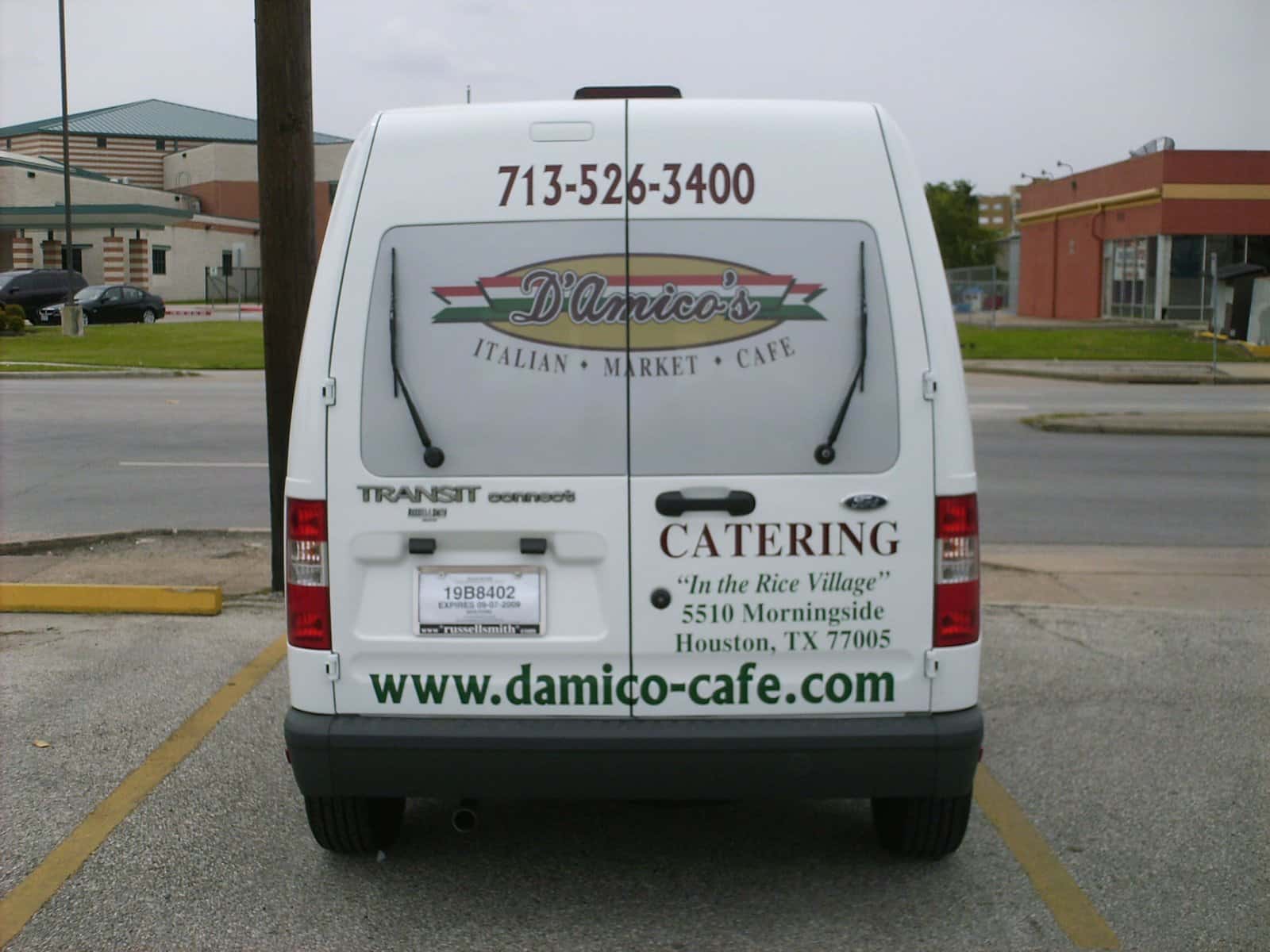
Ford (Transit, Transit Connect, F-150, Maverick). Ford is the workhorse of the fleet world. The Transit’s tall, slab-sided panels are among the easiest, most seamless canvases to wrap, and the broad tailgates and doors on the F-150 and compact Maverick give you clean, high-impact space for graphics.
Mercedes-Benz (Sprinter, Metris). The Sprinter is the premium benchmark for vehicle advertising. Because it is taller and longer than a standard cargo van, it works like a giant moving billboard, and its trim and emblems come apart and reassemble cleanly during installation.
Chevrolet / GMC (Express, Savana, Silverado/Sierra). GM’s boxier work vans and trucks are wrap-shop favorites. The Express has stayed largely unchanged for years, so proven templates keep installs fast, and its flat steel panels and square tailgates keep material waste low.
Toyota (Tacoma, Tundra, RAV4). For smaller service vehicles and sales fleets, Toyota is a strong pick. The RAV4 has a surprisingly upright side profile and flat door faces for a compact SUV, so text and logos stay readable, and the Tacoma’s clean stamping lines make panel alignment straightforward.
Fleet wrap cost estimates (2026)
Cost scales with the body style, because a bigger vehicle needs more premium cast vinyl (like 3M 2080 or Avery Dennison SW900) and more installation time. The ranges below are national 2026 industry estimates for professional-grade wraps, not Houston Sign Company quotes, meant to help you budget. Your actual price depends on the vehicle, how much coverage you want, and the material.
| Vehicle type | Partial wrap | Full wrap | Primary benefit |
|---|---|---|---|
| Compact car / sedan | $800 – $1,500 | $1,500 – $3,000 | Economical to run and to wrap |
| Standard pickup (e.g., Toyota Tacoma) | $1,200 – $2,000 | $2,500 – $4,500 | Great balance of utility and style |
| Full-size work van (e.g., Ford Transit) | $1,500 – $2,500 | $3,500 – $6,000 | Flattest panels, fastest installation |
| High-roof / box truck (e.g., MB Sprinter) | $2,000 – $3,500 | $4,500 – $6,500 | Maximum billboard visibility |
For a firm number on your vehicle, the best step is a quick quote based on your exact make, model, and coverage. Have a box truck or a food truck? Those have their own considerations, and we handle both.
Frequently asked questions
What is the difference between a vehicle wrap and vehicle graphics?
A wrap covers the whole vehicle (or a large section) in custom vinyl and can change its color, while vehicle graphics are cut vinyl letters, logos, and spot decals applied to specific areas over the existing paint. Wraps deliver maximum impact; graphics are the budget-friendly way to brand a vehicle.
How much does a vehicle wrap cost in Houston?
It depends on the vehicle size, how much of it you cover, and the material. National 2026 estimates run from roughly $1,500 for a small partial wrap up to $6,500 for a full high-roof van or box truck. The most accurate way to know your cost is a quote on your specific vehicle.
Which vehicles are best for fleet wraps?
Vans and trucks with large, flat panels and simple trim wrap best. The Ford Transit, Mercedes-Benz Sprinter, and Chevrolet Express are top choices, with the F-150, Silverado, Tacoma, and RAV4 also strong for mixed fleets.
Do vehicle wraps damage the paint?
When quality vinyl is properly installed on sound factory paint and removed correctly, a wrap does not damage the finish. In many cases it protects the paint underneath from sun and minor wear.
How long do vehicle wraps last?
A professional wrap in premium cast vinyl with a protective laminate typically lasts around five to seven years, depending on sun exposure, washing, and how the vehicle is stored. Unlaminated spot graphics can fade sooner in strong UV.
Should I choose a wrap or just graphics?
Choose a wrap if you are rebranding or want the vehicle to be the advertisement. Choose graphics if you mainly need your logo and contact details on the vehicle at the lowest cost. Many fleets do both to stay on budget while looking consistent.
Turn your vehicles into Houston’s hardest-working advertising
Whether it is one van or an entire fleet, Houston Sign Company designs, prints, and installs wraps and graphics that get your brand noticed on Houston roads. Request a quote or call 713-662-3123 and we will help you weigh the option that fits your budget and goals.